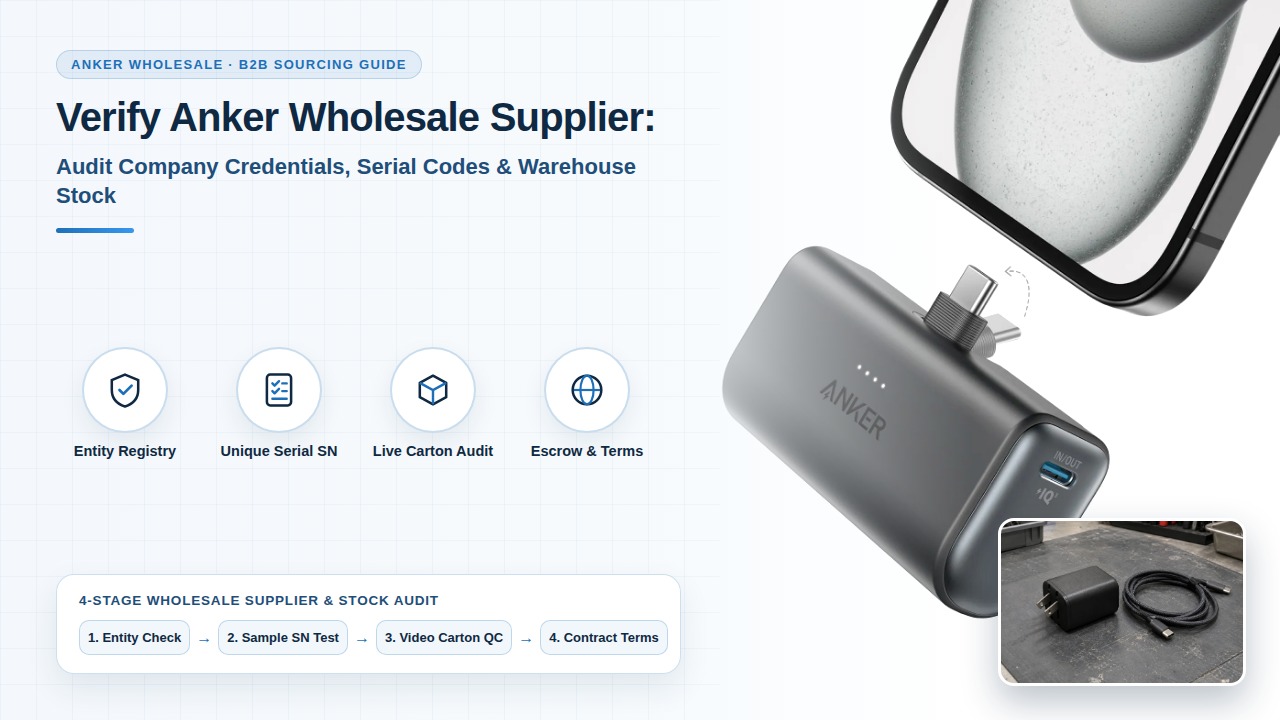
Verify an Anker wholesale supplier against the proposed order: who sells it, which product version is offered, what evidence accompanies the goods and who handles a problem after delivery. A logo, a product photograph and a low price do not answer those questions.
Identify the seller and payment recipient#
Request the legal company name, invoice details, business address and payment instructions. Compare them with the quotation and independently obtained company records. Resolve differences before paying, including trading names, transliterations and payments to another company. A character-for-character name rule alone can reject legitimate translations while missing a fraudulent change of account.
Our About page identifies GuangZhou Duohuo Technology Co., Ltd as the operator of Anker Wholesale. If your procurement policy requires an authorized channel, request evidence for the relevant market and verify it with Anker. Authentic goods, seller identity and brand authorization are separate checks.
Check the product and its sourcing evidence#
Anker’s authenticity guidance provides its official channel directory and security-code checking route. Code labels vary by product and country. For unresolved cases, collect the receipt, packaging and product photographs, serial information and purchase details for Anker support.
Record the exact model, regional version, color, condition and quantity on each order line. Ask for current photographs of the offered stock and reconcile the labels with the packing list. Agree whether inspection may open retail seals and how inspected units will be identified.
Agree inspection before the order#
Write down who performs the check, where it happens, the sampling plan, the equipment used and the acceptance criteria. Match electrical tests to the exact model and its manufacturer documentation. A generic ripple threshold or a named sampling standard does not define a complete test plan.
| Check | Evidence to keep | Decision before payment | | ---------- | ----------------------------------------------------------- | ------------------------------------- | | Seller | Quotation, invoice issuer and independently checked contact | Resolve inconsistent identities | | Product | Model label, regional version and packing list | Approve substitutions explicitly | | Source | Purchase records and any required authorization | Confirm the scope of the documents | | Inspection | Agreed method, sample size and results | Record accepted exceptions | | Recall | Current official campaign lookup where relevant | Hold affected or unresolved units | | Returns | Seller’s written defect and return terms | Identify responsibility after handoff |
Review recall and transport separately#
Use the current Anker recall information and the campaign-specific instructions for the proposed models. A successful charge test cannot clear a recalled unit. Our recall lot-check guide explains how to keep a purchase-line record.
For battery shipments, ask the responsible carrier or dangerous-goods specialist which documents and packaging apply to the route. Request the corresponding model documentation before booking. Keep passenger travel rules separate from commercial freight requirements.
Send a quote request that can be checked#
Send model codes, quantities, destination, required documents and the intended handoff point through the RFQ page. State which checks must finish before payment and which substitutions need approval. Compare written offers on the same scope, including inspection, freight, returns and taxes where applicable, rather than assuming a fixed percentage saving or a five-year failure cost.
Reviewed October 24, 2026. Product and regulatory references are linked at the relevant checks; commercial terms are confirmed in the order quotation.