Approve a Qi2 wireless charger by matching its exact model to a WPC Magnetic Power Profile record, checking the intended phone-and-case fit, and verifying what its power rating measures. For a 15W purchase line, keep the charger's maximum wireless output separate from the USB supply rating and the phone's changing battery-charge power. The checks below connect those three questions to a supplier document request and sample acceptance record.
What does MPP tell a wholesale buyer?#
MPP means Magnetic Power Profile: magnetic positioning helps bring the transmitter and receiver coils into alignment. It identifies a charging profile; the order still needs an explicit power class. WPC distinguishes the original 15W Qi2 generation from Qi2 25W, introduced in July 2025. Write the required class beside the model rather than treating “Qi2” as a universal 15W ceiling.
WPC's November 2023 launch announcement distinguished magnetic MPP, carrying Qi2 branding, from the nonmagnetic Extended Power Profile under Qi v2.0. This matters when a quote says only “Qi v2” or “magnetic wireless charging.” Ask for the exact certified-product entry and its profile.
| Purchasing input | What to specify | Decision it supports |
|---|---|---|
| Product identity | Brand, model, regional suffix and WPC ID | Match the offered unit to its certification |
| Wireless rating | Power class and maximum output at the phone position | Approve the intended 15W purchase line |
| Phone and case | Exact handset, software and approved case model | Establish the compatible receiving setup |
| Supply bundle | Adapter model, output profiles, plug region and cable | Provide the charger’s documented input |
| Physical format | Pad or stand; intended phone orientation | Check seating and camera clearance in use |
Use the charger sourcing hub to organize the charger family and supply requirements. Preserve the regional bundle identity when comparing quotations: an included adapter and a buyer-supplied adapter create different purchasing lines.
How do you verify a specific 15W model?#
Match the printed model, the WPC record and the manufacturer's output specification. WPC's certified-product database is the reference for the certification check. A brand's membership or a logo on a sales sheet is insufficient to establish the offered model's entry.
Anker's MagGo Wireless Charger (Pad), A25M0, provides a concrete reference. WPC record QI-14791 identifies that part number and MPP profile. Anker's Canadian product specification provides the separate input and maximum-output ratings below.
| Field | Published value | Purchasing use |
|---|---|---|
| Brand / manufacturer part number | Anker / A25M0 | Compare with the offered unit and carton |
| WPC product type | PTx product (power transmitter) | Identify the charger-side record |
| WPC version / profile | 2.0.0 / Magnetic Power Profile (MPP) | Keep the specification version and profile together |
| Certification date | 29 December 2023 | Identify the specific certification record |
| Charger input | 9V⎓2.5A | Check the documented adapter and cable configuration |
| Wireless output | 15W maximum | Use as a maximum rating for the stated model |
Keep a copy of the matching record with the quote and label photographs. If a supplier substitutes another model, regional bundle or charging format, repeat the identity and compatibility checks for that item. Certification identifies the design; the purchasing documents must also identify the units being supplied.
Why do coil alignment and case fit matter?#
Magnets help position the phone, while the coils transfer energy. Both the lateral position and the separation between the coils affect coupling. Texas Instruments explains this relationship in the “Power Transfer” section of its bq500211 datasheet. For purchasing, the useful question is whether the intended phone and case seat in the charger's designed position.
A magnetic attachment can feel secure while a case lip, camera surround or stand geometry prevents flat seating. More case material also changes the distance between the charging surfaces. Check the approved phone-and-case combination, then inspect the contact area and camera clearance in the actual charging orientation.
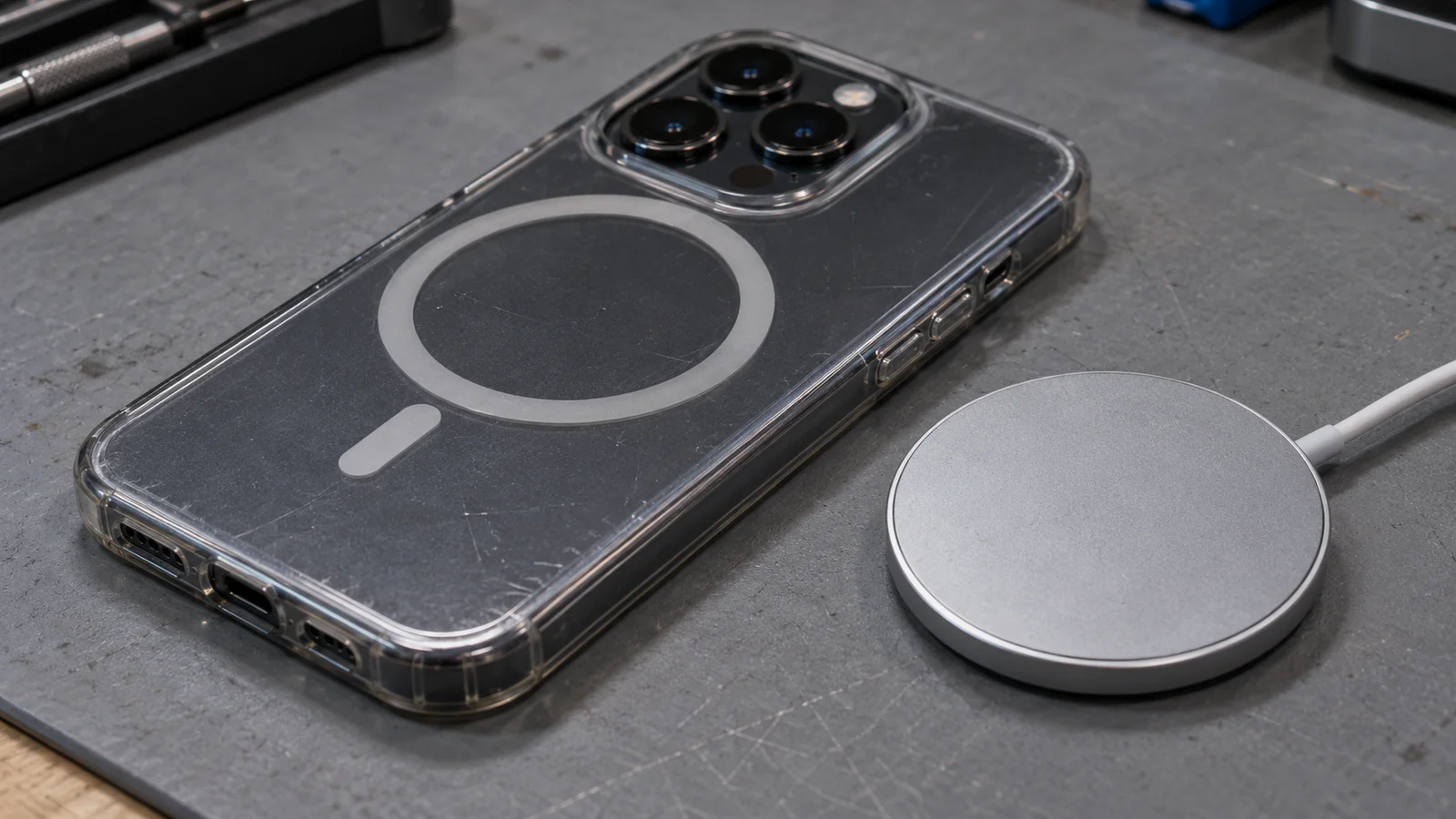
Check the case back, raised camera surround and pad face together: these surfaces determine how the phone seats.
Use the exact model's case guidance. For A25M0, Anker's Canadian FAQ recommends official Apple magnetic cases and advises avoiding cases thicker than 2.5 mm. Apply that condition to this model; case thickness alone does not establish compatibility. Check the case construction and magnetic arrangement as well.
For an accessible engineering design, request the supplier-controlled magnet-array drawing, coil-center reference, alignment tolerance and enclosure stack-up. Evaluate the assembly against that drawing and the agreed acceptance criteria. For branded finished goods, request approved compatibility guidance and sample fit evidence when internal drawings are unavailable.
Repeat attachment in the intended orientation and compare seating with the approved reference sample. A change after removing or replacing a case helps narrow the investigation. Identifying a ring-position defect requires inspection against the product's design references.
How should you verify the 15W claim?#
Specify the measurement point before accepting a power report. The USB connection feeds the transmitter; the wireless receiver then supplies the phone's power-management circuitry. Battery charging is a later point in that chain. A USB input reading and a charging icon cannot establish 15W at the wireless receiver output.
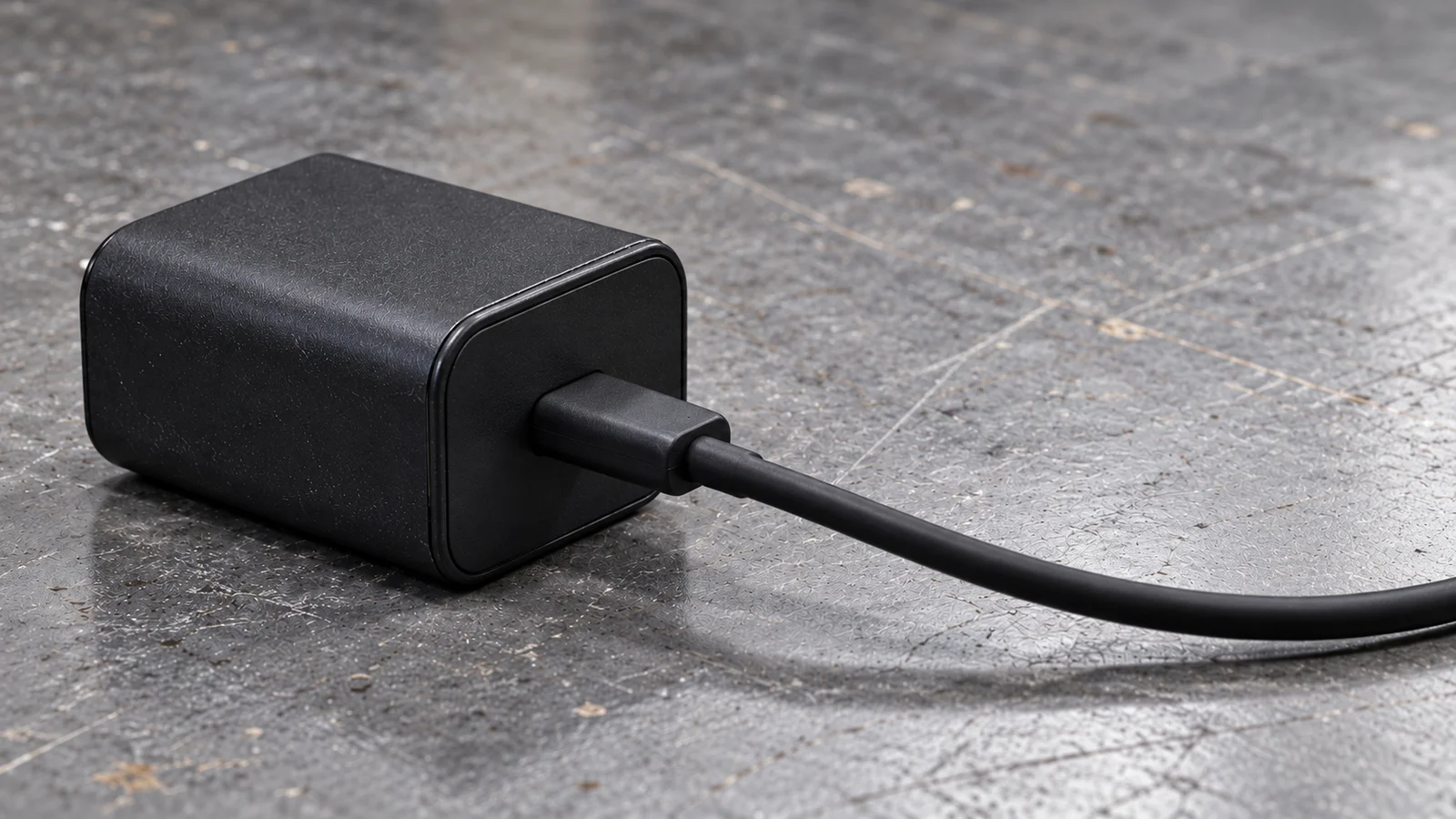
Record the adapter and cable at the supply connection; receiver-output verification belongs farther along the power path.
Infineon's WLC1115 datasheet, section 5.1, describes transmitter/receiver communication before power transfer and operation according to receiver capability. The practical implication is to check the supported profile as well as the power supply. A larger adapter wattage alone does not establish the wireless mode.
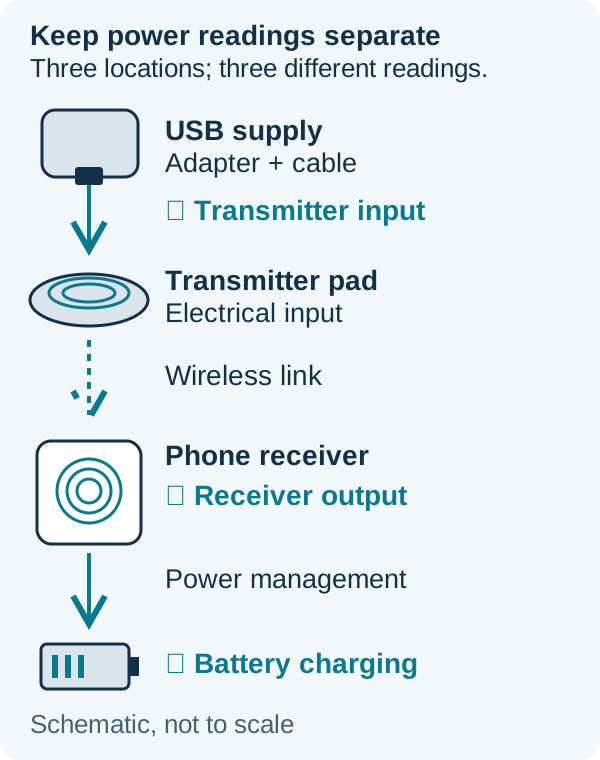
State whether a power trace measures transmitter input, receiver output or battery charging. Schematic, not to scale.
Ask the manufacturer or a qualified laboratory for a report that records:
- The claimed output: exact charger model, phone charging position, rated class and negotiated profile.
- The measurement method: receiver or fixture identity, measurement point, instrument setup and power trace.
- The operating setup: phone and software where applicable, case, battery state, screen/background activity, orientation, adapter and cable.
- The thermal conditions: ambient conditions and temperature trace alongside the power trace.
- The acceptance basis: sample/lot identifiers, agreed test duration, required operating conditions and comparison with the approved sample.
A maximum rating describes capability under the applicable conditions. Evaluate the documented power behavior over the agreed test interval; battery state, device load and thermal control can change the trace. For A25M0, retain 9V⎓2.5A input and 15W maximum wireless output as separate specification fields rather than calculating operating efficiency from their nameplate values.
What if the sample slows down or disconnects?#
Check supply, fit and temperature in order, changing one condition at a time. Apple documents that charging can slow or pause when a device becomes too warm. Slow charging therefore needs investigation across the whole setup before attributing it to coil or magnet placement.
| Observation | First checks | Purchasing decision |
|---|---|---|
| Phone attaches but the required mode is absent | Exact phone support, certified profile, adapter output and cable | Resolve the profile or supply mismatch before judging alignment |
| Charging changes with the case or after reseating | Approved case, camera clearance, flat seating and reference sample | Record the fit difference and request a model-specific explanation |
| Power declines as the setup warms | Ambient conditions, device workload, starting battery state and temperature trace | Compare under the agreed conditions before accepting a sustained-power claim |
| A stand loses contact in the intended orientation | Case contact area, mounting position and support geometry | Require a stable result in that orientation before approving the combination |
| Unit or carton model differs from the paperwork | Printed SKU, regional suffix and matching WPC entry | Hold approval until the identities match |
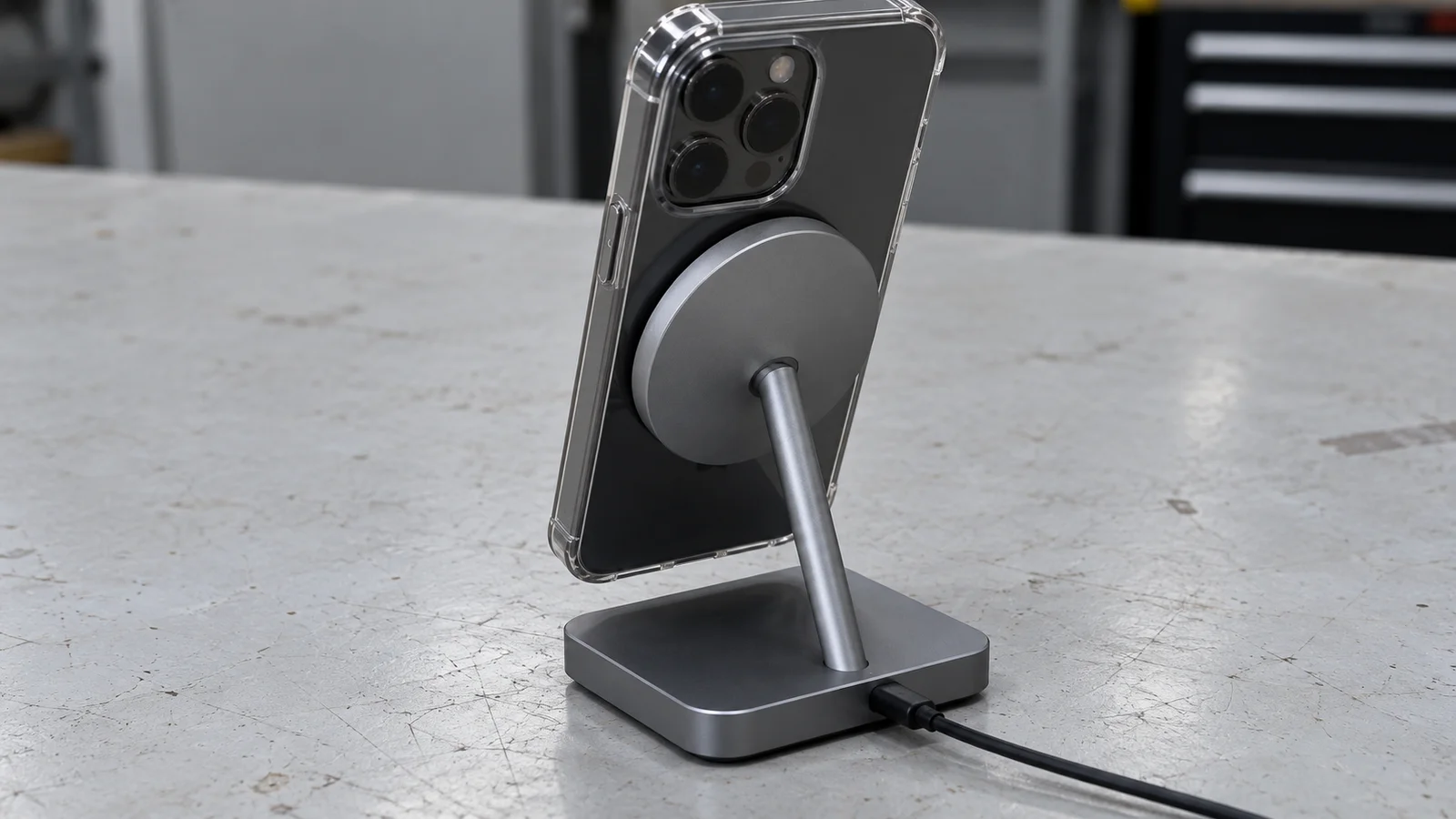
Inspect the contact edge below the camera surround with the phone mounted in its intended orientation.
Keep a successful reference setup identifiable. If the charger, case, adapter or cable changes between trials, record that change rather than combining the results into one acceptance entry. Escalate unexplained differences with the configuration and traces attached.
Close the sample record with a purchasing decision:
- Approve the documented combination when the model identity, compatibility evidence and sample results meet the agreed acceptance conditions. Attach the reference setup and reports to the order.
- Request a repeat check when the phone, case, supply or test conditions changed. Keep the two configurations identifiable so the supplier can explain the difference.
- Hold the affected purchase line when the supplied model conflicts with the certificate or an unexplained performance difference remains. Resolve the mismatch before accepting a substitution or extending the result to a batch.
What should you request before ordering?#
Request the alignment evidence and the wireless-output label together with the exact model identity. That connects the mechanical fit to the electrical claim on the purchasing line.
Use this document request with the supplier:
Please identify the charger model, regional bundle and WPC ID; provide the maximum wireless-output label for the phone position, the required input specification and the supplied adapter/cable details. Include the approved phone-and-case combinations, the magnet-array/alignment drawing where available, and the supporting certification and power-verification report. For the sample check, identify the measurement point, setup, power/temperature traces and agreed acceptance conditions.
Add your destination market, quantity, preferred pad or stand format and proposed phone/case combination. Use our sales contact details to send those requirements for an availability and quotation inquiry, including the documents needed for approval.
For the wired supply portion of the order, the wholesale charger checklist covers model and plug-version fields. If the requirement is portable magnetic charging with stored energy, use the Nano and MagGo power-bank family to define that separate product line.
Questions that affect compatibility#
Does adding a magnetic ring make an older Qi phone a Qi2 receiver?
A magnetic ring changes how the phone attaches. The phone's receiver and supported charging profile still determine its electrical capability. Check the handset manufacturer's charging support and the charger's approved combination before using a Qi2 or 15W claim for that bundle.
What should a buyer check for a Qi2 Ready combination?
WPC's July 2025 logo guidelines describe receiver/accessory combinations with specific dependencies. Identify the phone and the designated accessory together, then check the approved combination. Keep both identities in the purchase record when the required accessory supplies the magnetic alignment.
Can a pad's approval be carried over to a stand?
Check the stand's own model record and compatibility documentation. Its mounting angle, camera clearance and phone orientation add fit conditions to the purchase decision. Repeat the sample check in the intended orientation with the selected phone and case.
Technical references#
- Wireless Power Consortium, Qi Wireless Charging overview; Qi2 certification launch announcement, 15 November 2023; certified-product entry QI-14791, Anker A25M0, certification dated 29 December 2023.
- Anker, MagGo Wireless Charger (Pad), A25M0, Canadian product specification and case-compatibility FAQ.
- Texas Instruments, bq500211 datasheet, “Power Transfer,” page 9; Infineon, WLC1115 datasheet, section 5.1, page 25.
- Apple Support, If your iPhone or iPad gets too hot or too cold, device-temperature and charging guidance.
- Wireless Power Consortium, WPC Logo Display Guidelines, 22 July 2025, receiver/accessory combination guidance.